

-
 FLOW
FLOW
-
 PRESSURE
- Hydrostatic Level Sensor
- Finger -Type Differential Pressure Transmitter
- Finger Type Pressure Transmitter
- Finger-Type Pressure Transmitter with Indicator
- Stainless Steel Pressure Transmitter Without Gauge
- Pressure Transmitters with and without Gauges
- Flange Stainless Steel Body Pressure Transmitter
- Flush Diaphragm Pressure Transmitter
- Ex-Proof Pressure Transmitter
-
 LEVEL
LEVEL
-
 CONTROLLERS
-
 MOISTURE
-
 ANALYTICAL
-
 TEMPERATURE
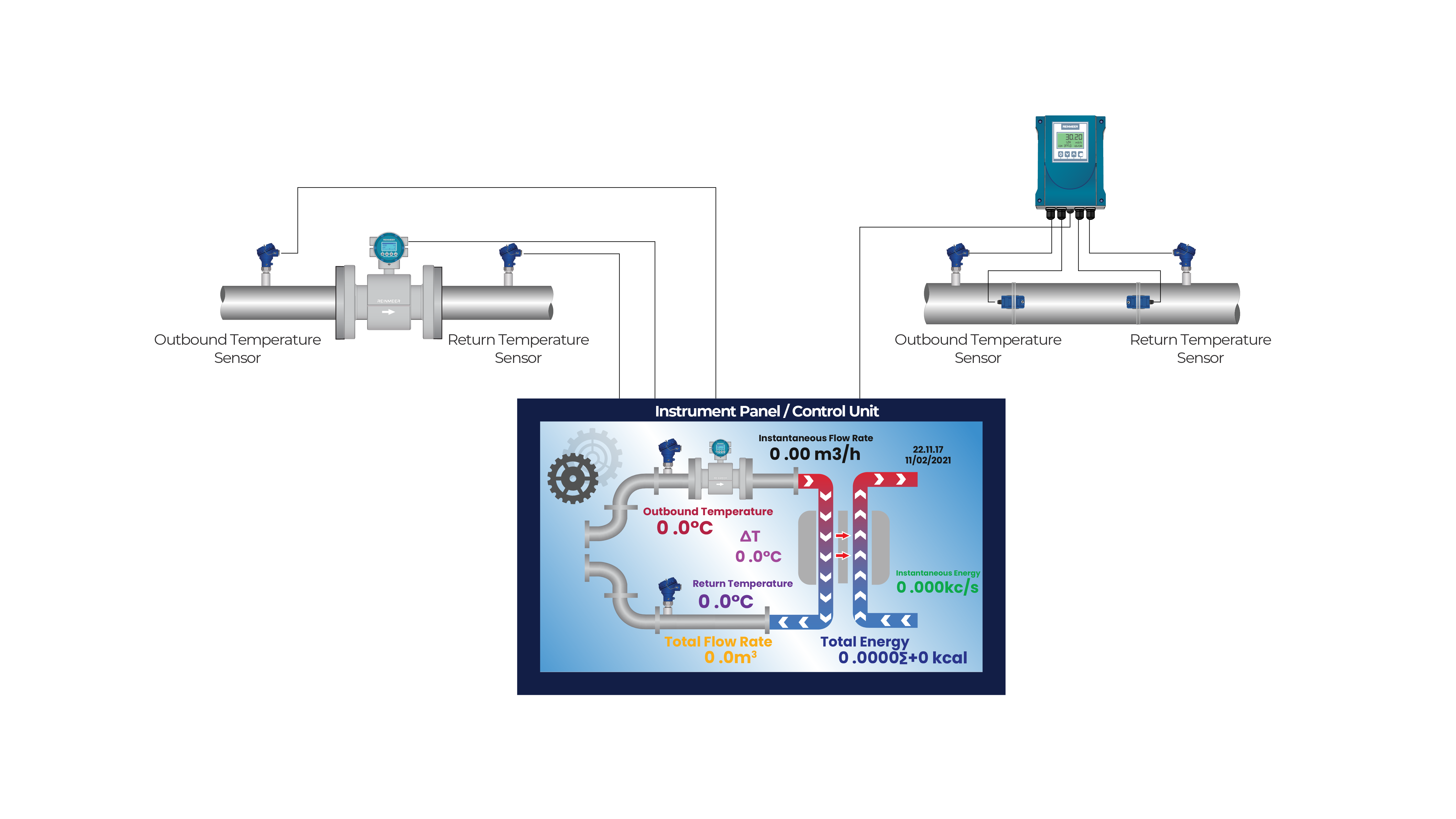
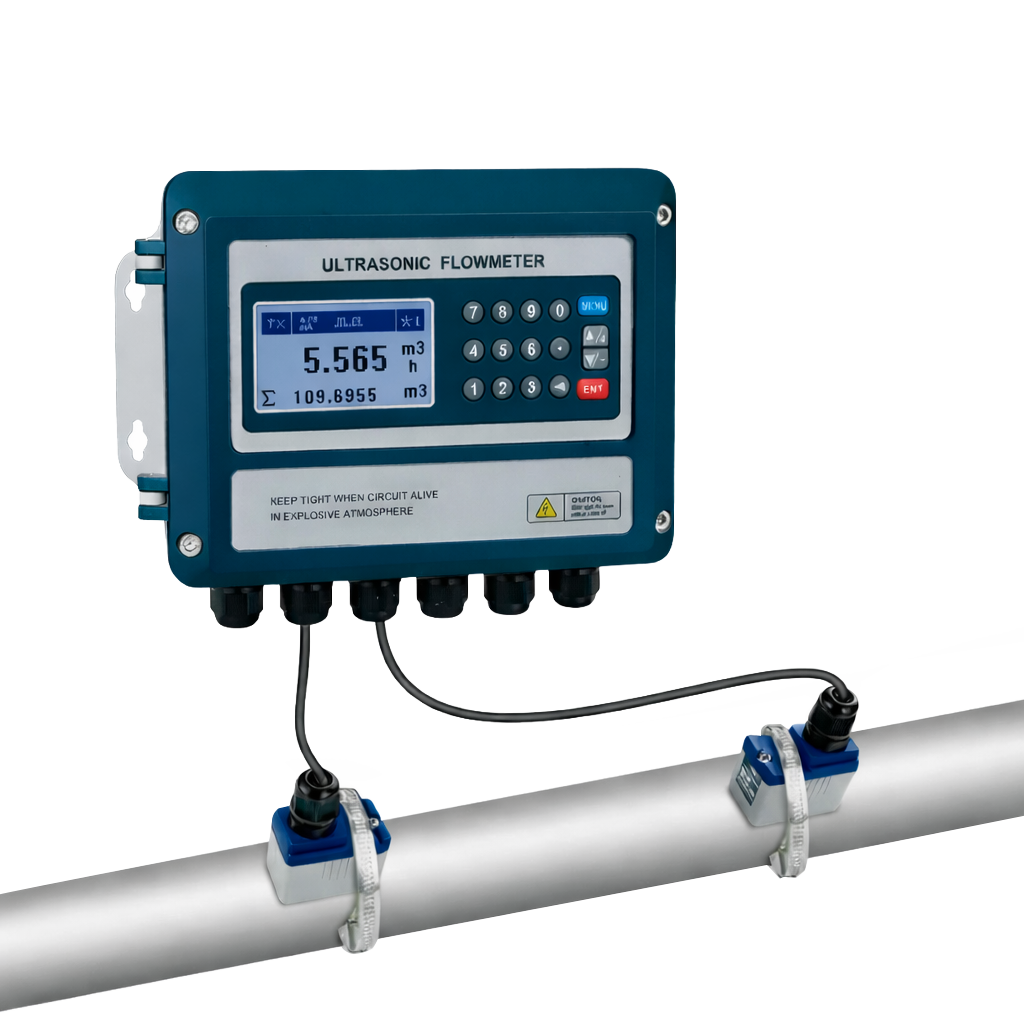
Ultrasonic flow meters are used to measure liquid flow in pipes by using high-frequency sound signals. This technology is widely selected in industrial applications where reliable measurement, low maintenance and flexible installation are required. Reinmeer ultrasonic flow measurement instruments are suitable for liquid flow monitoring in water systems, process lines, utility networks, HVAC applications and industrial automation environments.
An ultrasonic flowmeter can be used where operators need continuous flow data without relying on a mechanical measuring element. Since the measurement principle does not require a turbine, rotor or moving part, the technology can reduce mechanical wear and support stable long-term operation. Depending on the application and model configuration, ultrasonic measurement may be used in inline or clamp-on arrangements.
A clamp on ultrasonic flow meter is especially useful when pipe cutting is not preferred or when flow measurement must be added to an existing pipeline. In this type of installation, the ultrasonic flow sensor is mounted externally on the pipe surface, allowing the instrument to detect flow without direct contact with the liquid. This can be practical for retrofit projects, large pipe sizes, temporary measurements and applications where process interruption should be minimised.
In automation projects, the device may also be described as an ultrasonic flow transmitter when the focus is on the signal sent to a PLC, SCADA system, indicator or monitoring unit. Reinmeer ultrasonic instruments are designed to support liquid flow applications where measurement reliability, practical integration and process visibility are important.
How Ultrasonic Flowmeters Work
Ultrasonic flowmeters measure flow by transmitting sound signals through or along the liquid in the pipe. The instrument evaluates how these signals travel with and against the direction of flow. When liquid is moving, the transit time of the ultrasonic signal changes.
The electronics calculate the flow velocity from this difference and convert it into a flow rate value.
In many liquid applications, this principle allows flow measurement without a mechanical obstruction inside the pipe. This helps reduce pressure loss and avoids the wear associated with mechanical flow devices. For suitable applications, ultrasonic technology provides a practical method for monitoring water, process liquids and other compatible fluids.
The performance of an ultrasonic pipe flow meter depends on several conditions. Pipe material, pipe diameter, wall thickness, liquid properties, air bubbles, suspended solids, flow profile and installation quality can all affect signal stability. For clamp-on measurement, correct sensor positioning and acoustic coupling are especially important. For inline configurations, proper sizing and installation remain essential for reliable operation.
A clamp-on ultrasonic flow meter is a non-intrusive flow measurement device with sensors mounted on the outside of the pipe. It measures flow without cutting the pipe or contacting the liquid directly.
This type of instrument is useful for retrofit installations, temporary measurements, large pipe sizes and applications where process shutdown should be avoided. However, the pipe material, liquid properties and installation quality must be suitable for ultrasonic signal transmission.
Ultrasonic pipe flow meter accuracy can be affected by pipe material, pipe diameter, wall thickness, liquid properties, air bubbles, suspended solids, flow profile, sensor position and installation quality. Incorrect pipe data or poor acoustic coupling can also reduce measurement performance.
For stable measurement, the instrument should be installed where the pipe remains full and the flow profile is not heavily disturbed. Straight pipe length, sensor alignment and commissioning settings should be reviewed carefully.
Yes. Ultrasonic flowmeters can be connected to PLC, SCADA, DCS, indicators, recorders or remote monitoring systems depending on the available output signals. Common options include 4–20 mA analogue output, pulse output, relay output and digital communication.
This allows flow data to be used for process monitoring, control, reporting, alarms or energy management. Correct wiring, scaling, grounding and commissioning help ensure reliable signal transmission.
For conductive liquid applications, electromagnetic flow meters may be more suitable. For clean, low-viscosity liquids, turbine flowmeters can be considered. For open channels or partially filled systems, open channel flowmeters may be required. To compare all flowmeter options, visit the main flowmeter category.