

-
 FLOW
FLOW
-
 PRESSURE
- Hydrostatic Level Sensor
- Finger -Type Differential Pressure Transmitter
- Finger Type Pressure Transmitter
- Finger-Type Pressure Transmitter with Indicator
- Stainless Steel Pressure Transmitter Without Gauge
- Pressure Transmitters with and without Gauges
- Flange Stainless Steel Body Pressure Transmitter
- Flush Diaphragm Pressure Transmitter
- Ex-Proof Pressure Transmitter
-
 LEVEL
LEVEL
-
 CONTROLLERS
-
 MOISTURE
-
 ANALYTICAL
-
 TEMPERATURE
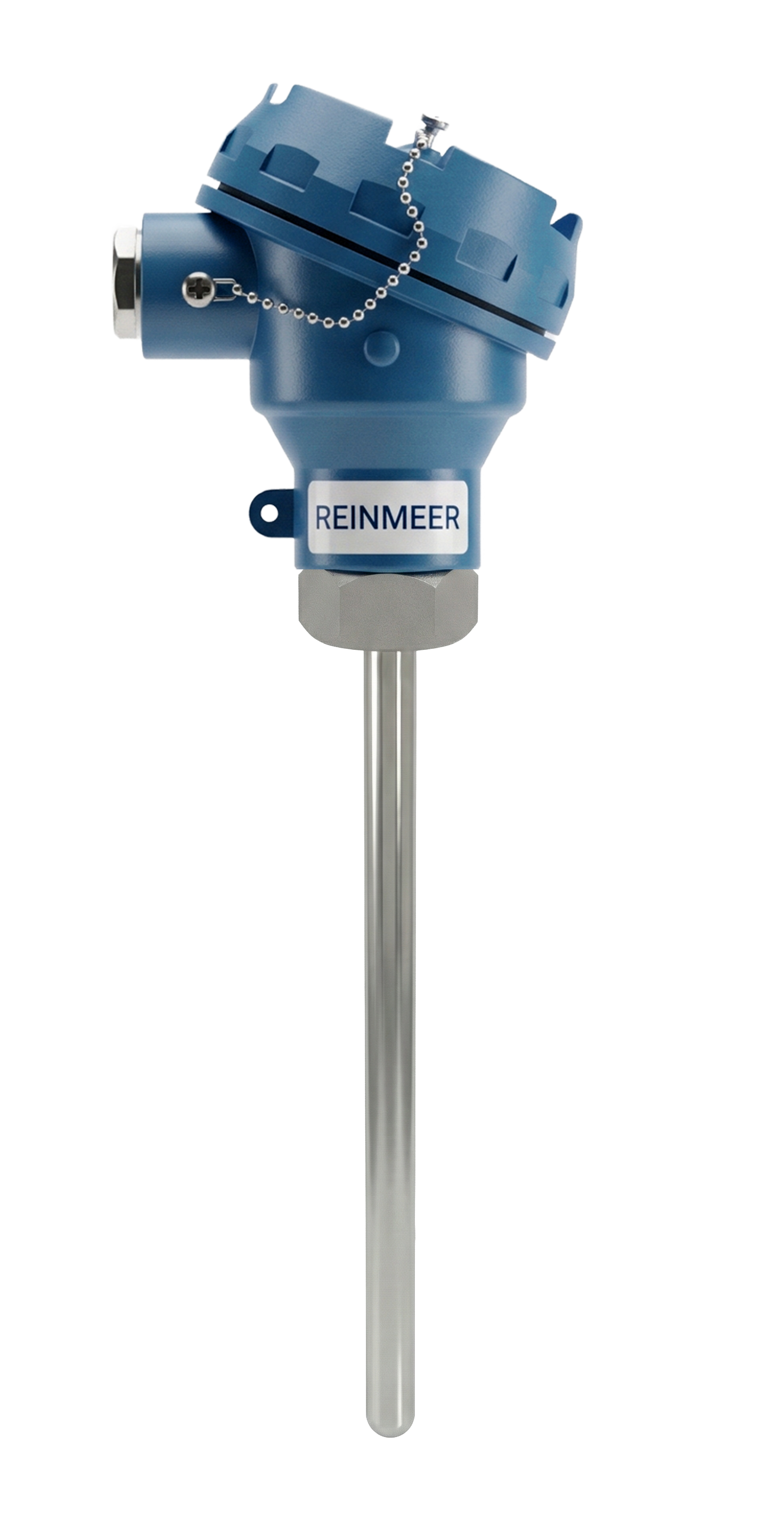
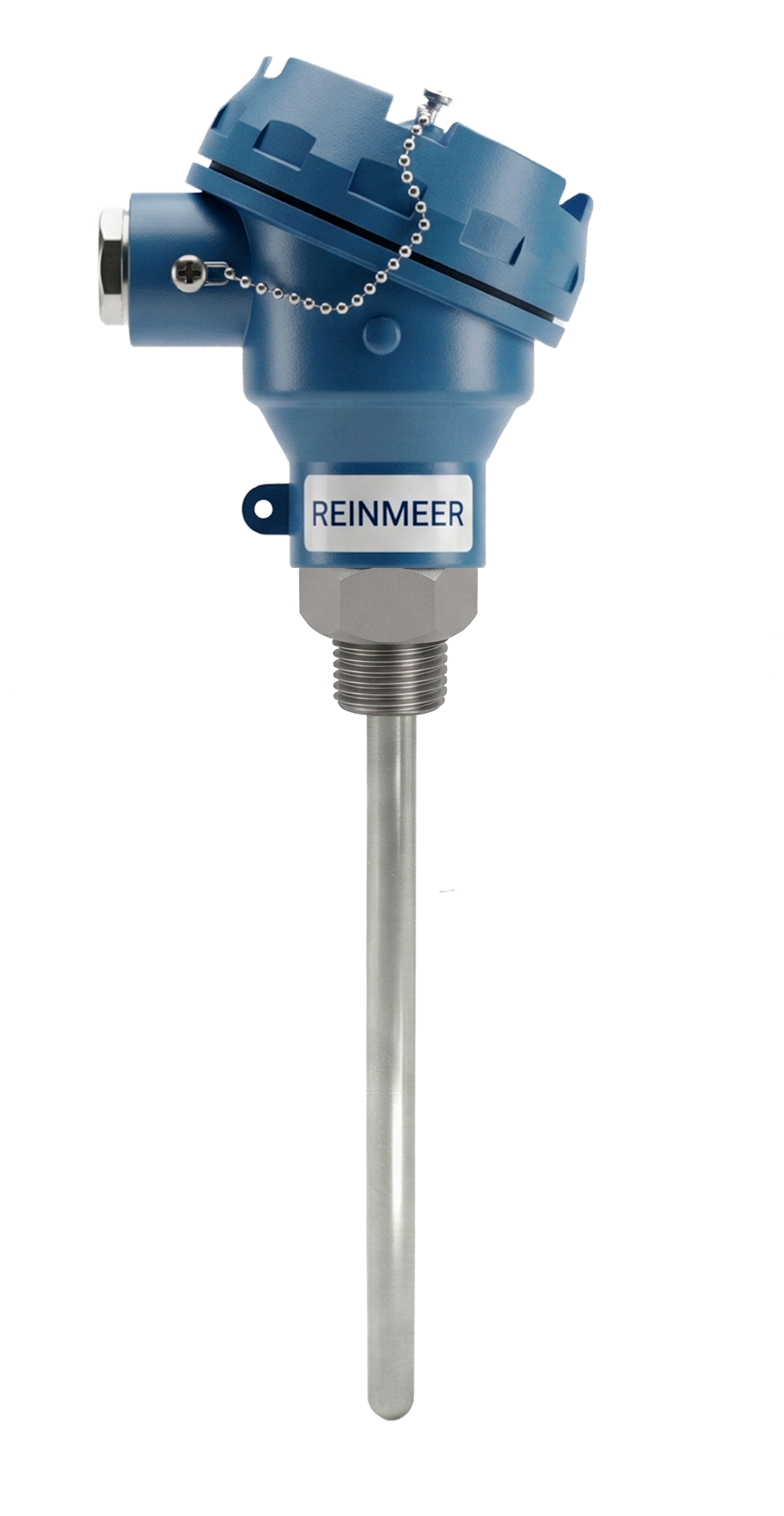
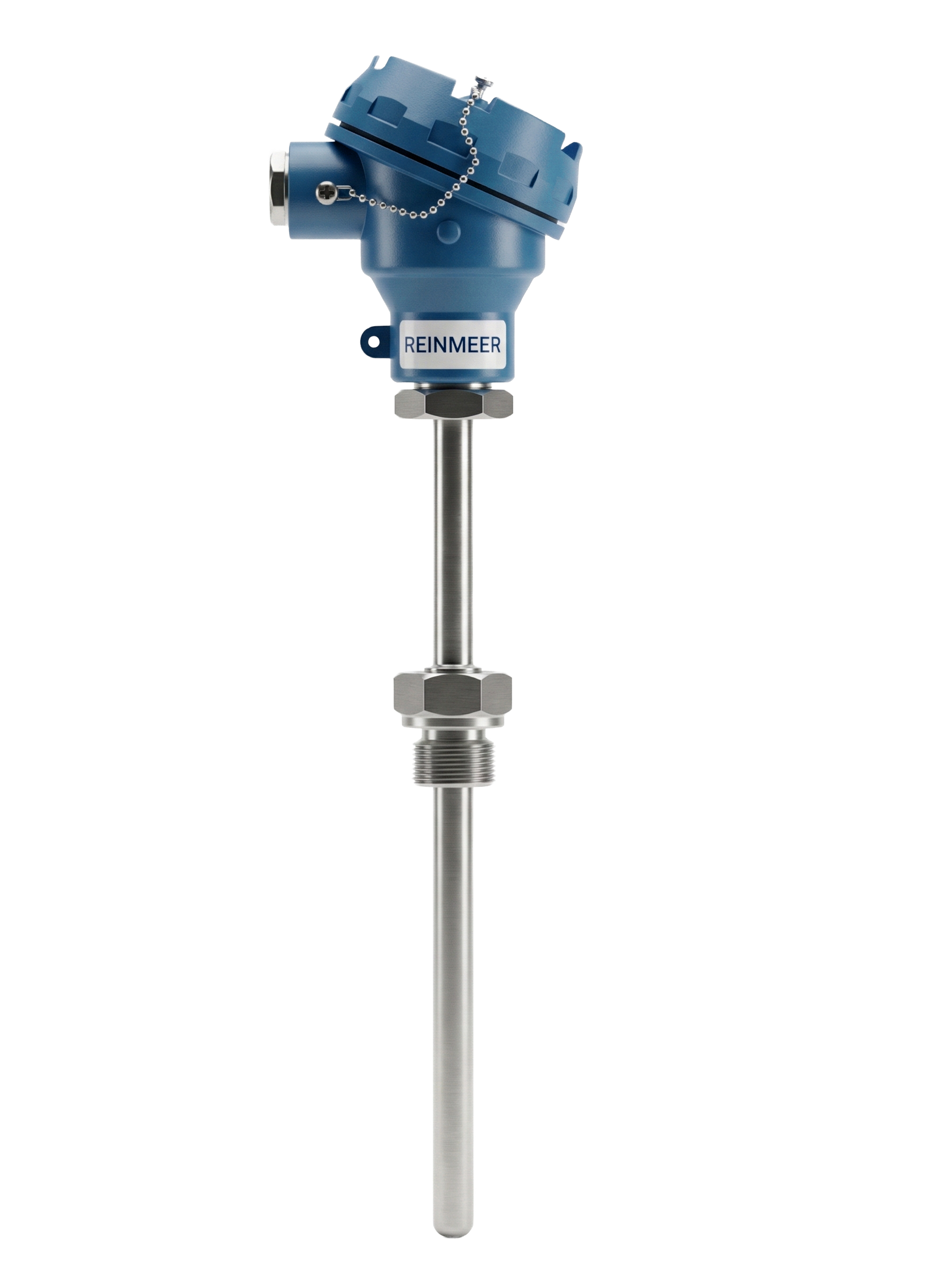
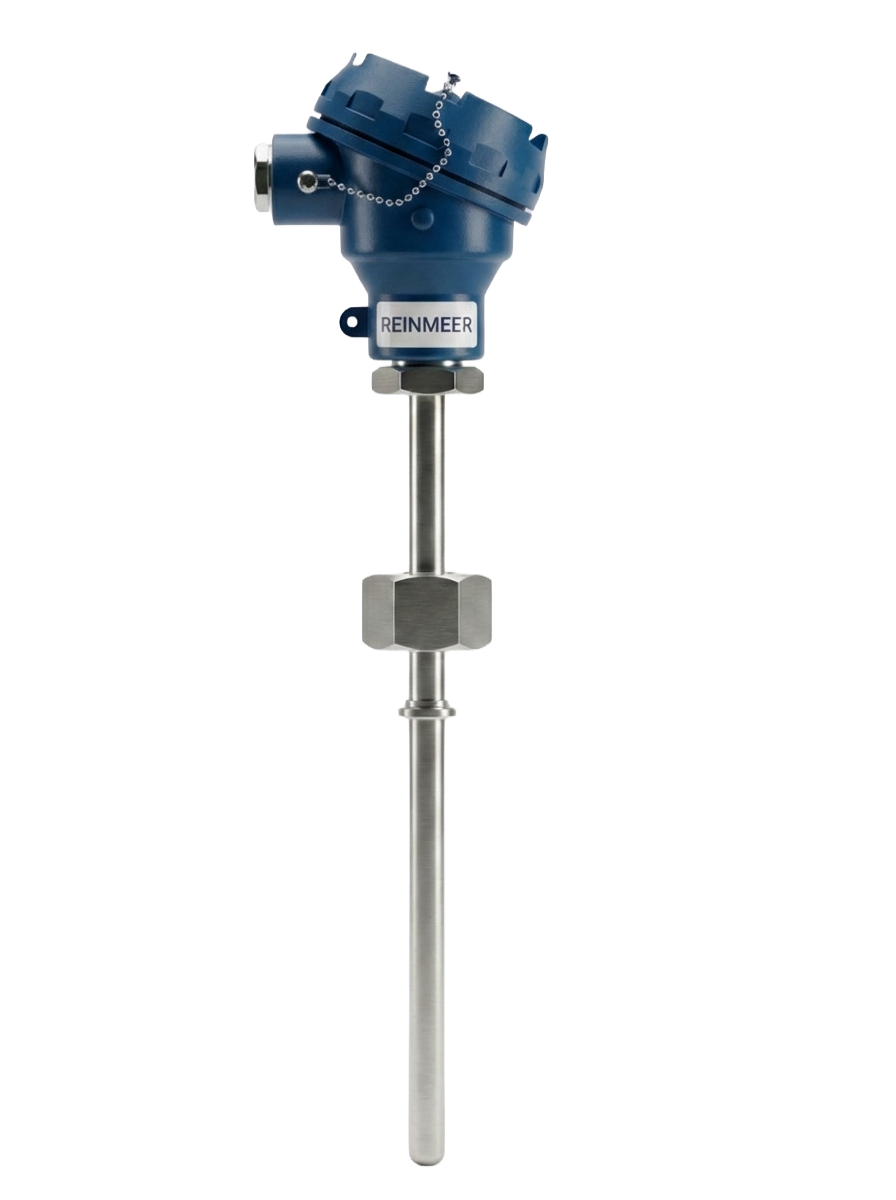
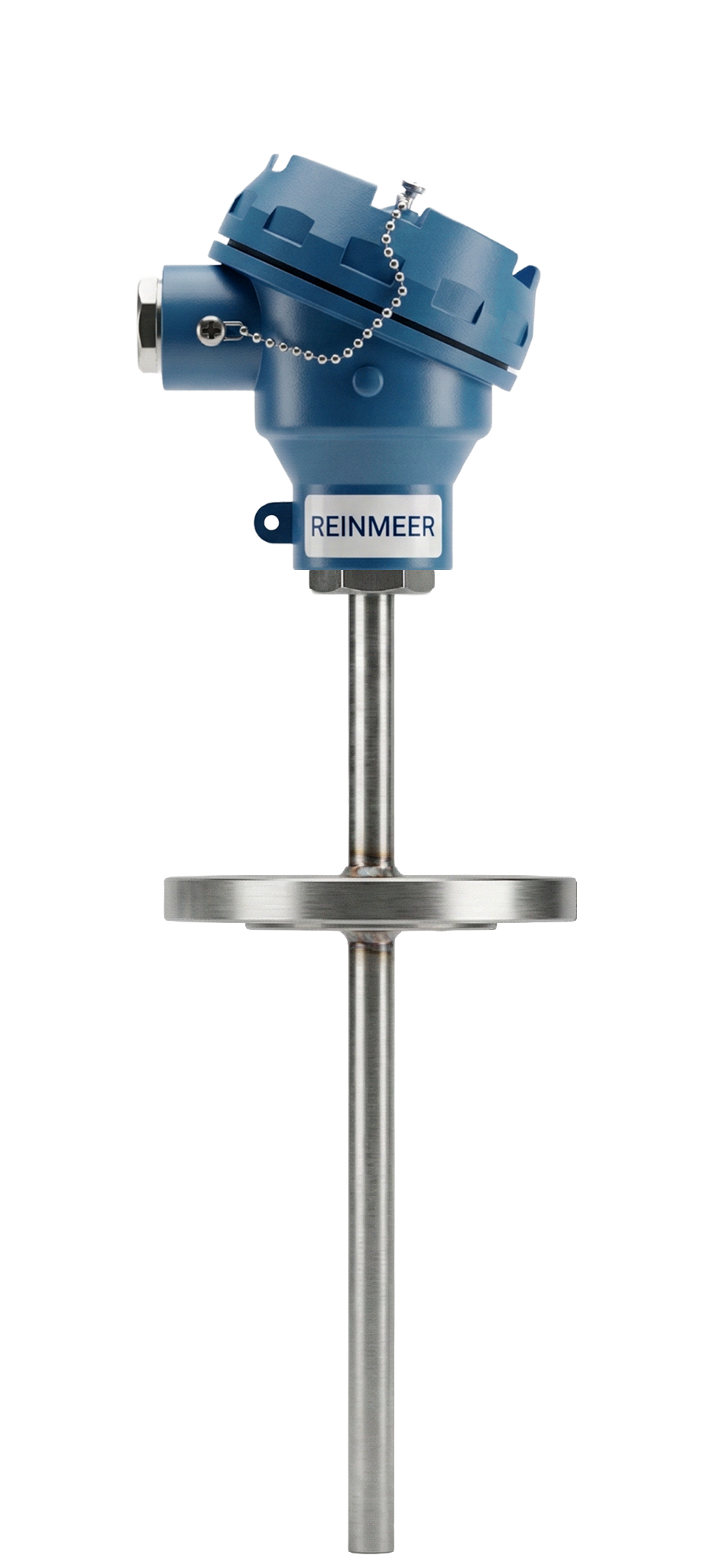
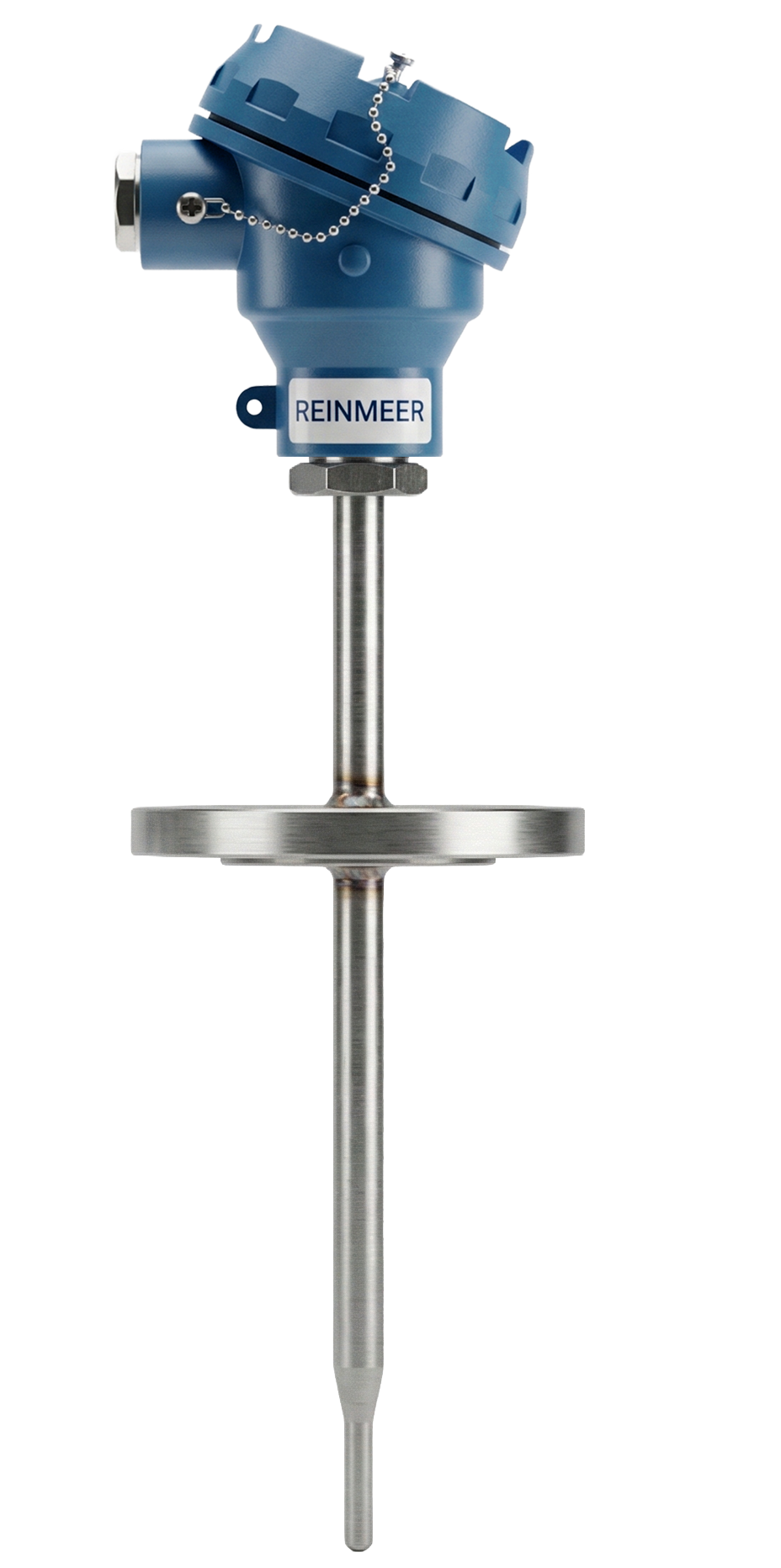
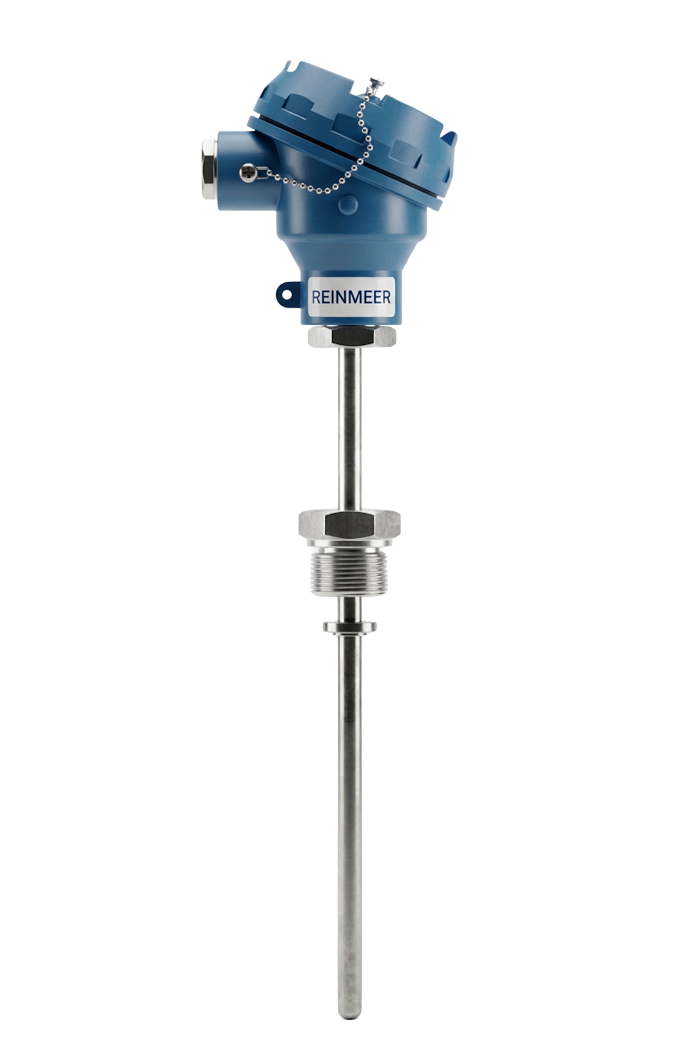
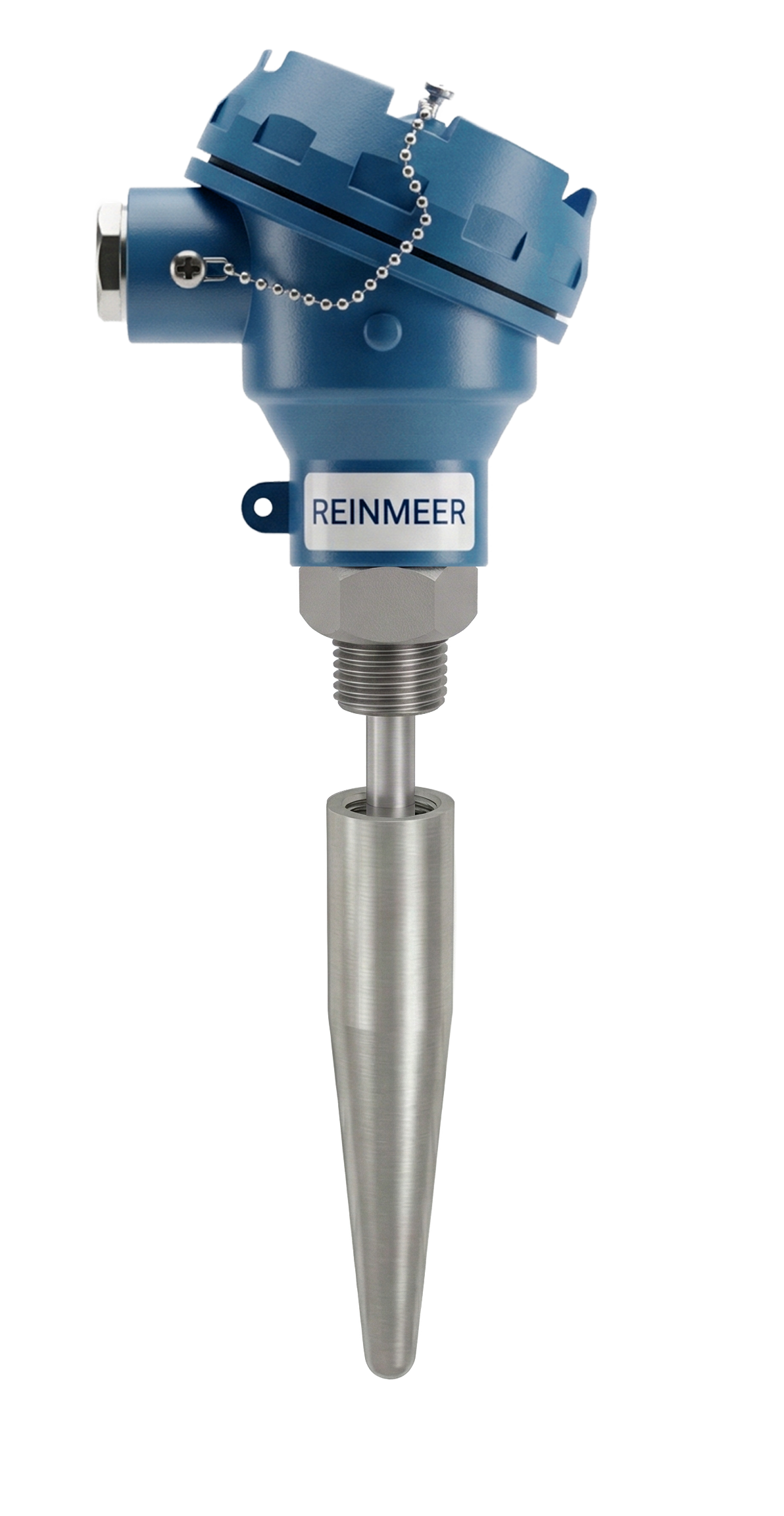
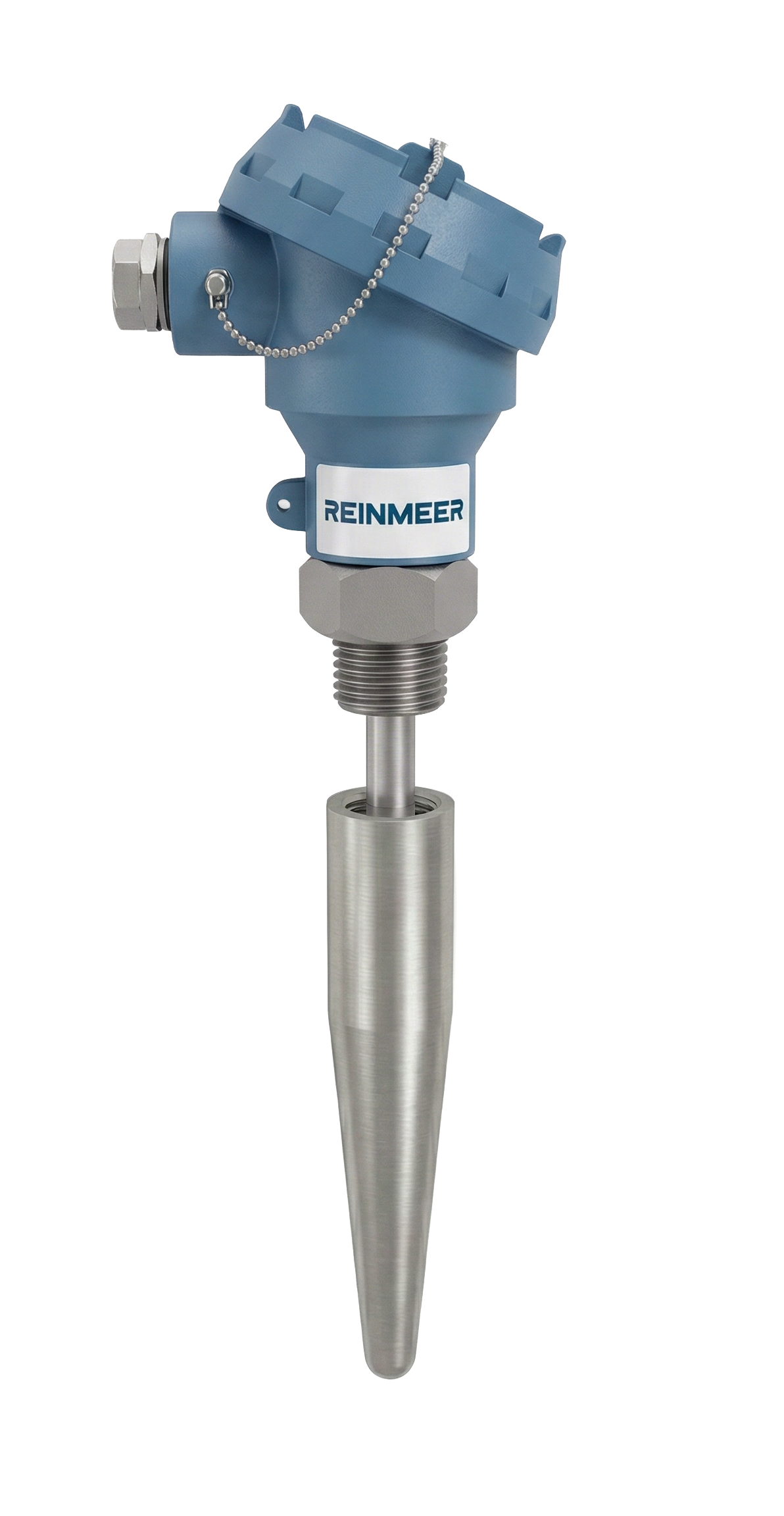
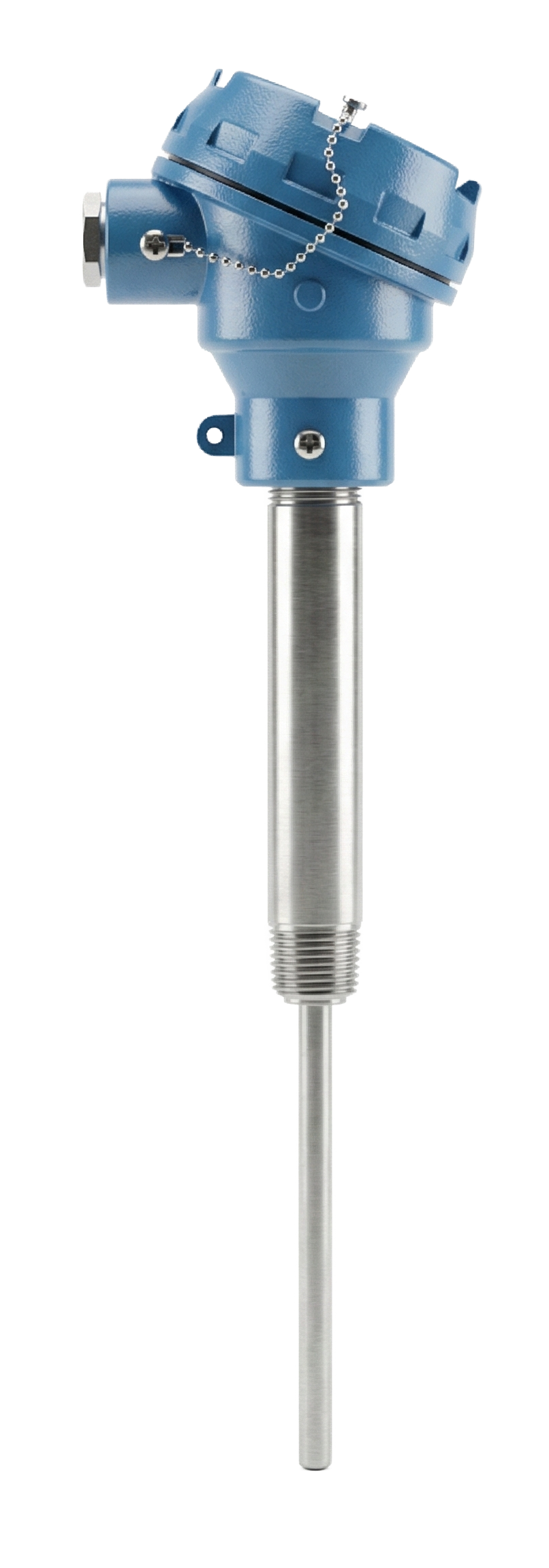
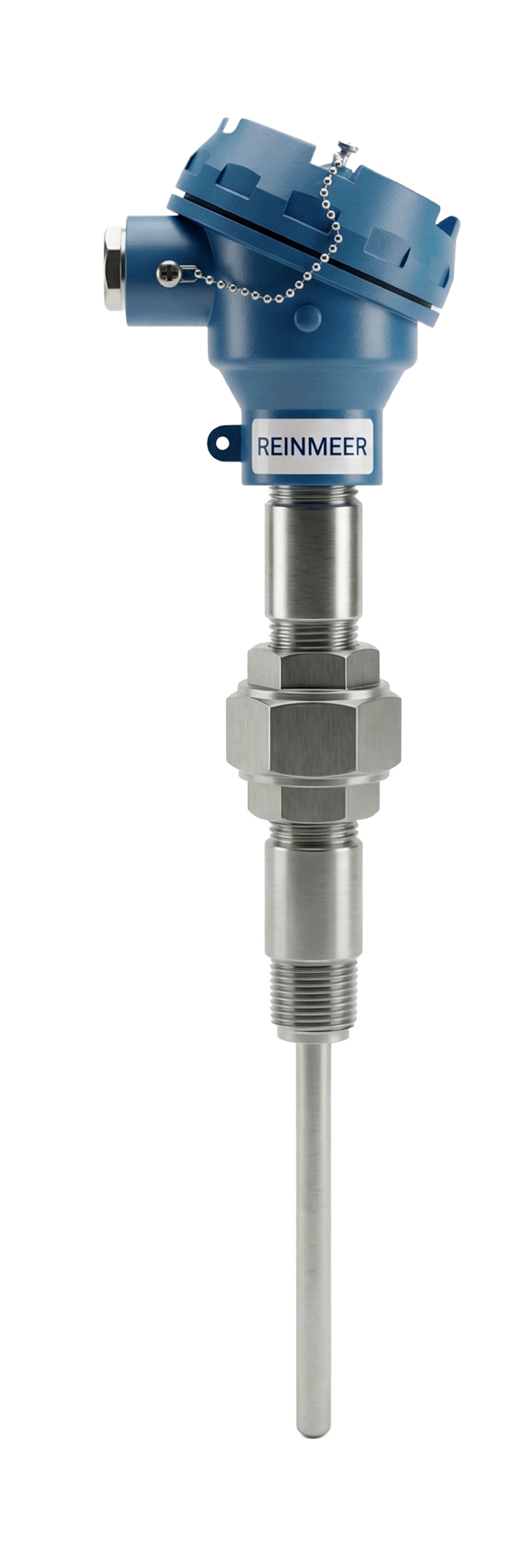
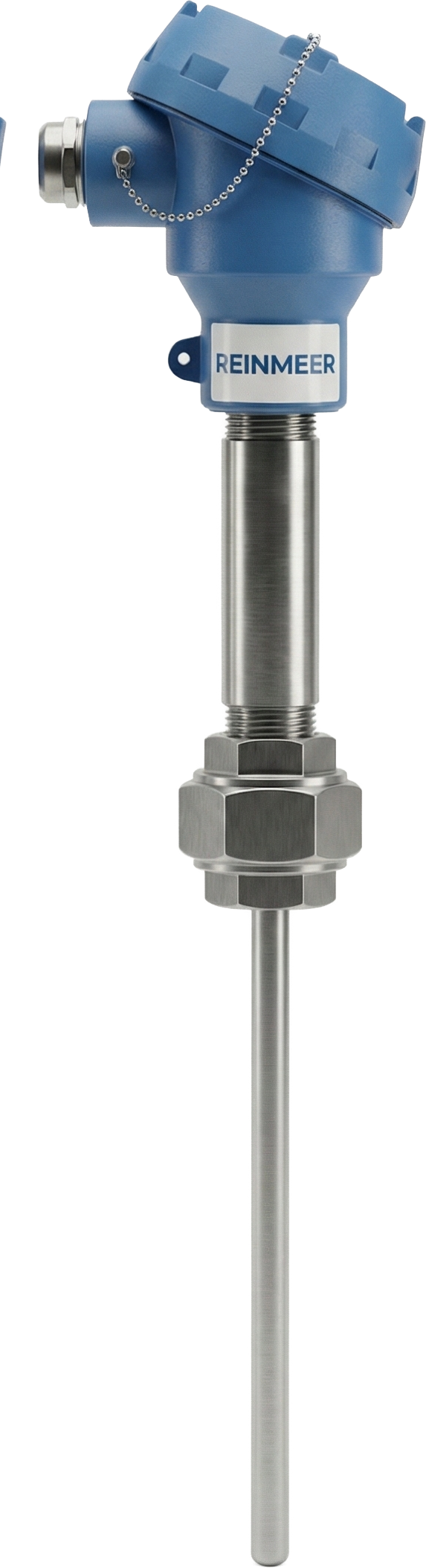
Temperature measurement is a fundamental part of industrial process control, product quality, equipment protection and operational safety. Reinmeer provides temperature sensors and measurement instruments designed for applications where stable and reliable temperature data is required across process lines, tanks, machinery, heating systems, cooling systems, energy facilities and automation environments.
In industrial applications, temperature directly affects material behaviour, process efficiency, safety limits and final product consistency. For this reason, selecting the correct temperature sensor requires more than choosing a measuring range. The process medium, operating temperature, response time, sensor construction, installation method, mechanical protection, vibration, cable type, connection head, thermowell requirement and signal integration should all be evaluated during product selection.
Reinmeer’s temperature measurement portfolio includes industrial temperature sensors suitable for different process environments, including thermocouple-based solutions, RTD temperature sensors, sensors with connection cables and mineral insulated sensor designs. These technologies support a wide range of applications, from general temperature monitoring to demanding industrial measurement points where mechanical durability and measurement stability are important.
As a technical instrumentation brand, Reinmeer focuses on dependable measurement, practical installation and application-oriented sensor selection. Whether the requirement is monitoring process temperature, protecting equipment from overheating, controlling heating and cooling cycles or transferring temperature data to PLC and SCADA systems, Reinmeer temperature instruments are developed to support stable operation and reliable process control.
Key Factors in Temperature Sensor Selection
Temperature sensor selection should begin with the measuring range and the process environment. The sensor must be able to operate reliably at the expected minimum and maximum temperature values. If the process involves high temperature, rapid temperature changes, vibration or mechanical impact, the sensor construction becomes especially important.
The medium being measured is another key factor. Air, liquid, steam, gas, oil, chemical fluids, metal surfaces and solid materials may require different sensor designs or installation methods. In some applications, direct contact with the medium is possible. In others, a thermowell or protective sheath may be required to protect the sensor from pressure, corrosion, abrasion or mechanical damage.
Response time should also be considered. A fast-response sensor may be required in dynamic processes where temperature changes quickly, while a more robust design may be preferred in harsh environments where durability is more important than speed. Cable material, insulation type, connection head, process connection and electrical output should be selected according to the installation and control system requirements.
Applications of Industrial Temperature Measurement
Industrial temperature measurement is used across many sectors and process environments. In chemical and process industries, temperature sensors are used in reactors, storage tanks, pipelines, dosing systems and heat exchangers. In food and beverage production, temperature monitoring supports process consistency, hygiene control and product quality.
In energy and utility systems, temperature instruments are used in boilers, steam lines, cooling circuits, heat transfer systems, compressors and auxiliary equipment. In HVAC and building automation, they help monitor air, water and system temperatures for efficient operation. In manufacturing, temperature sensors are used in ovens, dryers, machines, moulds, bearings and production lines.
Different applications require different sensor constructions. Some processes need compact sensors with connection cables, while others require heavy-duty temperature probes, protective sheaths or mineral insulated sensor designs. The selected instrument should match the mechanical, thermal and environmental conditions of the application.
Industrial temperature measurement is the process of detecting, monitoring and transmitting temperature values from a process, machine, vessel, pipeline or controlled environment. These values are used to support process control, protect equipment, maintain production quality and ensure that operating conditions remain within defined limits.
Temperature measurement can be used in both simple monitoring points and complex control systems. In some applications, the sensor only provides a local or transmitted temperature value. In others, the measurement is part of a closed-loop control system that regulates heaters, coolers, burners, valves, pumps or process equipment.
The correct temperature instrument must be compatible with the process conditions. Factors such as maximum temperature, medium type, pressure, mechanical stress, vibration, response time and mounting position can all affect sensor performance. A sensor used in a low-temperature HVAC system will not have the same construction requirements as a sensor installed in a furnace, reactor, boiler or high-temperature process line.
A thermowell is a protective component installed between the process medium and the temperature sensor. It allows the sensor to measure process temperature while being protected from pressure, flow forces, corrosion, abrasion or mechanical damage.
Thermowells are especially useful in pipelines, pressurised vessels, high-temperature systems and applications where the sensor may need to be removed without stopping the process. The thermowell material, length, connection type and mechanical strength should be selected according to the application conditions.
Temperature measurement accuracy can be affected by sensor type, calibration, installation depth, heat transfer, response time, wiring, electrical noise, process conditions and mechanical construction. Incorrect installation is one of the most common causes of unreliable temperature readings.
For example, a sensor that is not inserted deeply enough into a pipeline may measure pipe wall temperature instead of actual process temperature. Poor contact, unsuitable sheath material, damaged cables or wrong input configuration can also reduce measurement reliability. Correct sensor selection and installation are essential for stable measurement performance.