

-
 FLOW
FLOW
-
 PRESSURE
- Hydrostatic Level Sensor
- Finger -Type Differential Pressure Transmitter
- Finger Type Pressure Transmitter
- Finger-Type Pressure Transmitter with Indicator
- Stainless Steel Pressure Transmitter Without Gauge
- Pressure Transmitters with and without Gauges
- Flange Stainless Steel Body Pressure Transmitter
- Flush Diaphragm Pressure Transmitter
- Ex-Proof Pressure Transmitter
-
 LEVEL
LEVEL
-
 CONTROLLERS
-
 MOISTURE
-
 ANALYTICAL
-
 TEMPERATURE
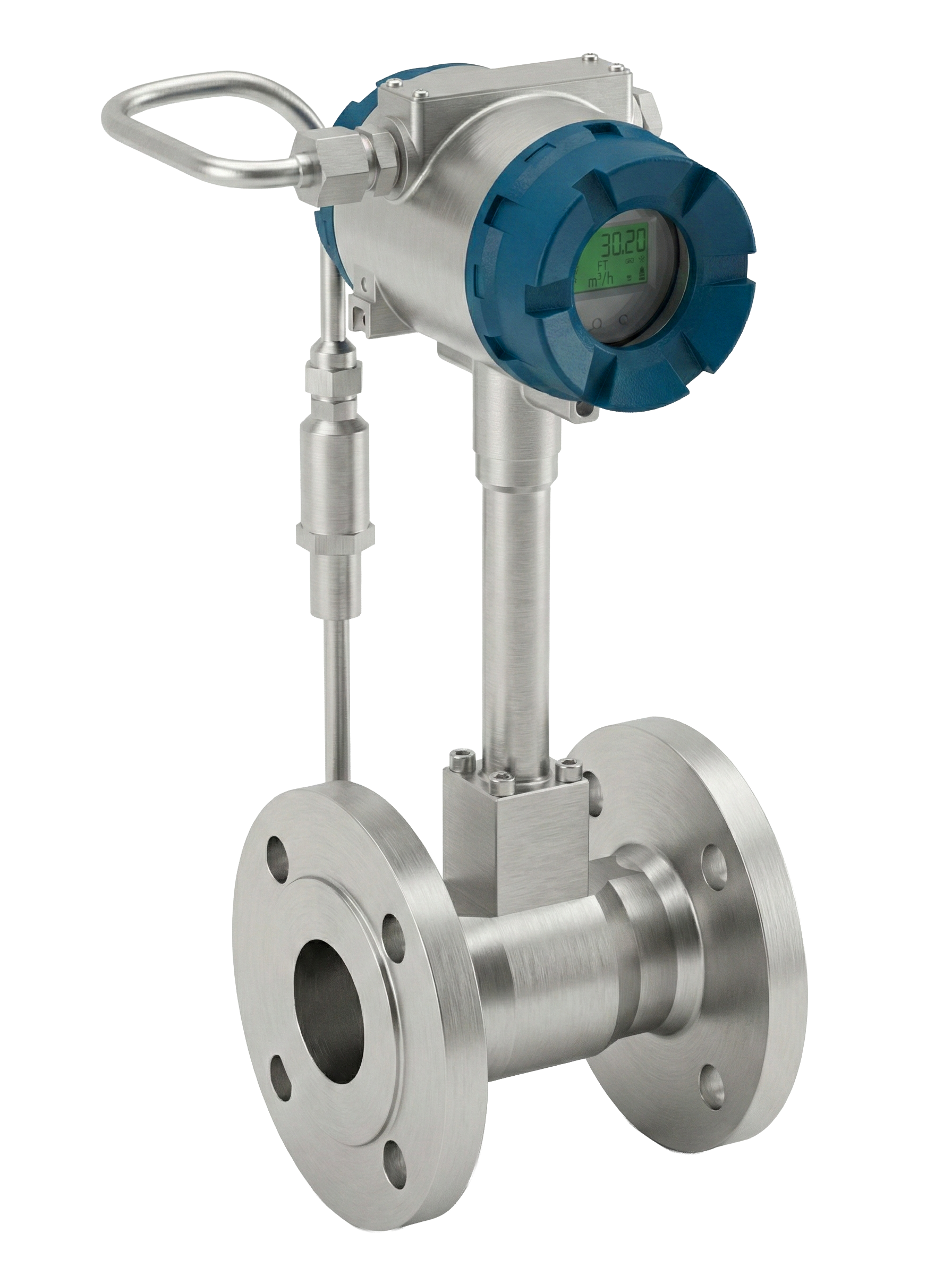
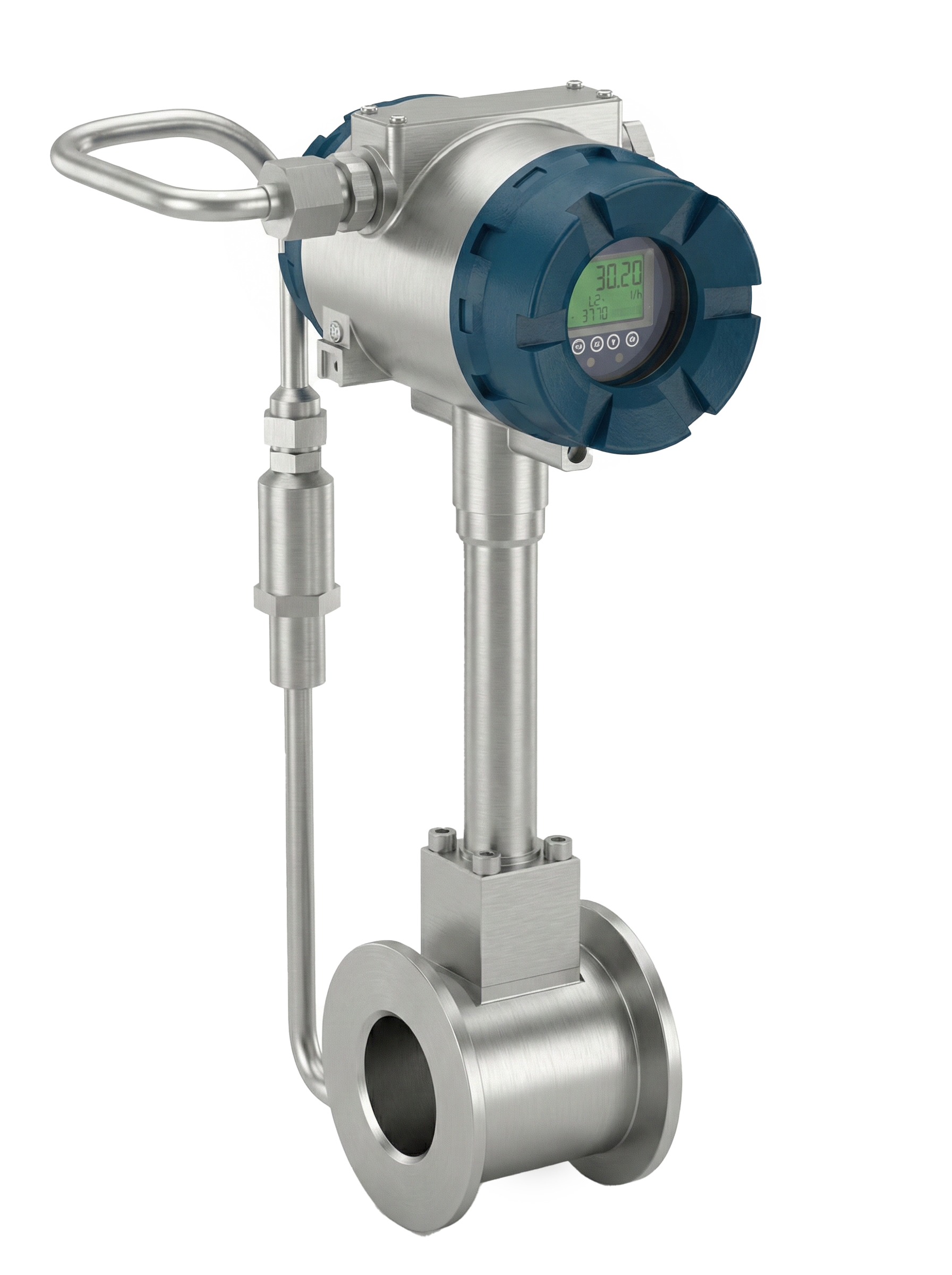
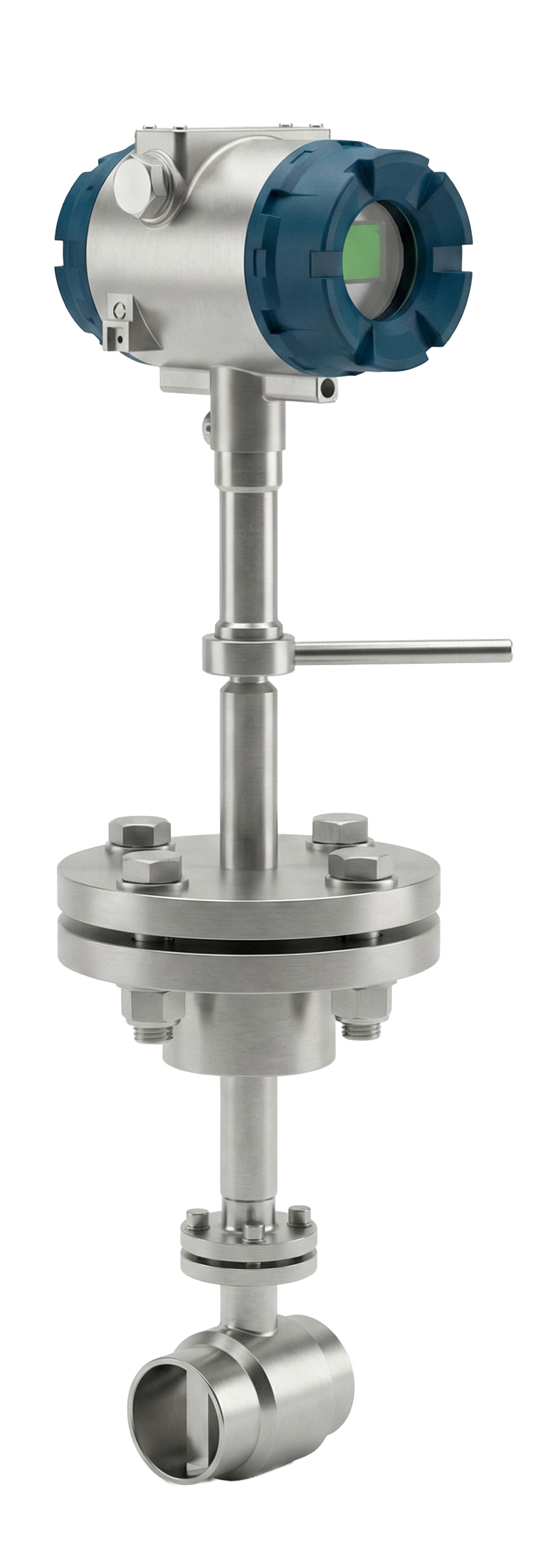
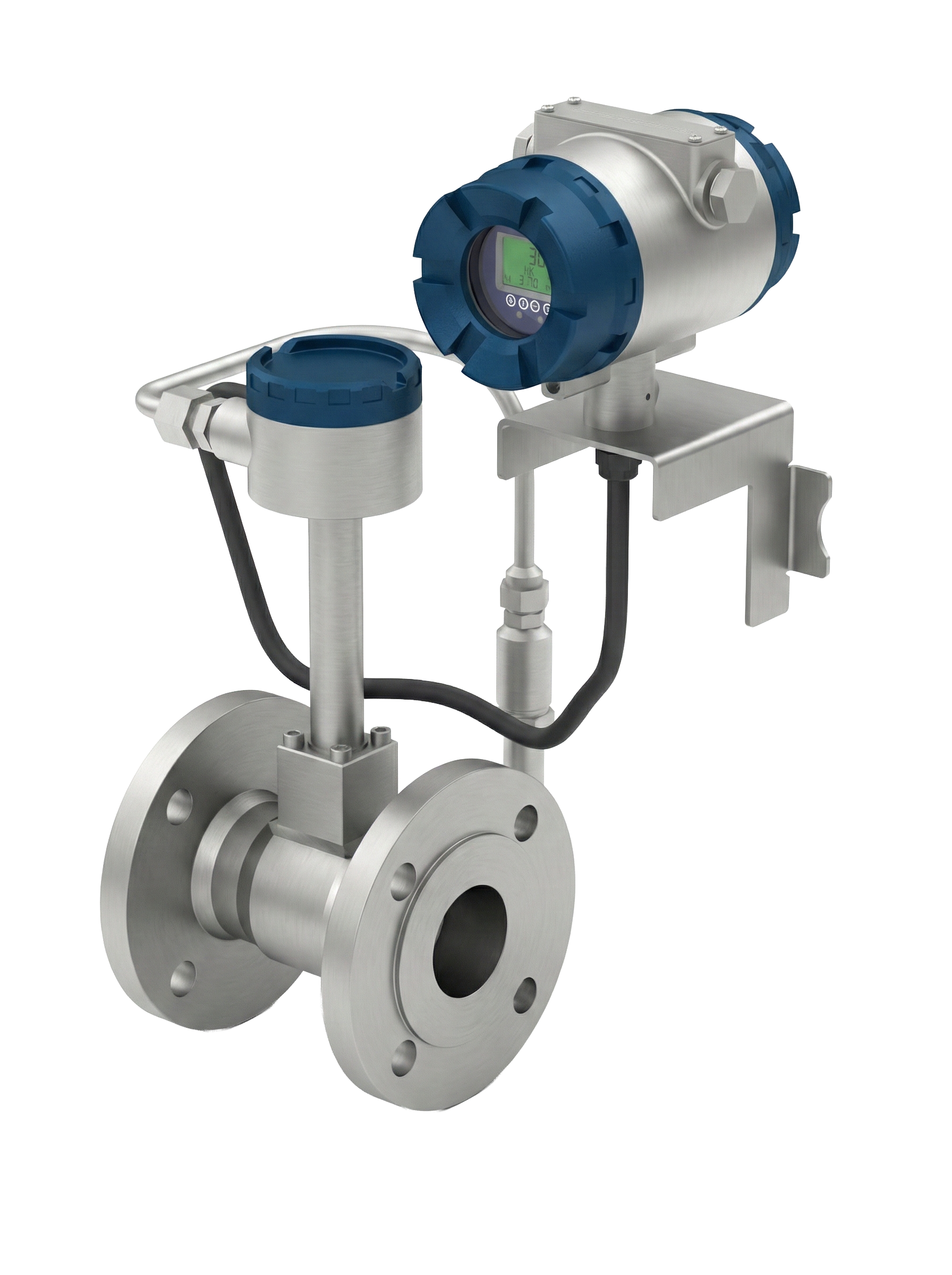
Vortex flow meters are used for measuring steam, gas, air and selected liquid flow in industrial pipe systems. This technology is widely applied in process plants where stable operating conditions, reliable signal output and low-maintenance flow measurement are required. Reinmeer vortex flow measurement instruments are suitable for applications such as steam distribution, compressed air lines, industrial gas systems, utility monitoring, process liquid measurement and general automation environments.
A vortex flow meter operates without a rotating mechanical measuring element. Instead, it uses the natural vortex formation created when fluid passes a bluff body inside the meter. The frequency of these vortices is related to the flow velocity, allowing the instrument to calculate flow rate. This makes vortex technology useful in applications where a robust industrial flow meter is required for steam, gas or compatible liquids.
In industrial documentation, this product type may also be written as a vortex flowmeter. When the focus is on the sensing element or measurement section, the term vortex flow sensor may also be used. For compressed air or air service applications, the same technology may be described as a vortex air flow meter. Although these terms can vary by application, the measurement principle remains based on vortex shedding and signal detection.
Reinmeer vortex flowmeters support process applications where flow data must be displayed, transmitted or integrated into automation systems. For very low flow rates, dirty liquids, high-viscosity fluids or applications requiring direct gas mass flow measurement, another flow measurement technology may be more suitable.
Process Conditions That Affect Vortex Measurement
Vortex flowmeters perform best when the flow velocity is within the recommended operating range and the process conditions are stable. The meter should be sized according to actual flow data rather than pipe size alone. If the velocity is too low, vortex generation may not be strong enough for stable measurement. If the velocity is too high, pressure loss, vibration or process limitations may become a concern.
Medium properties should also be reviewed. Steam quality, gas density, liquid viscosity, pressure, temperature and flow profile can all influence measurement performance. For steam and gas applications, compensation may be required depending on the measurement objective and system configuration. In some systems, pressure and temperature data may be used together with flow measurement to improve process evaluation.
Installation environment is another important factor. Vibration from pumps, compressors or nearby equipment may interfere with the signal. Disturbed flow caused by elbows, valves, reducers or control elements installed close to the meter can also affect accuracy. A suitable measurement location helps improve long-term stability.
Correct installation is essential for vortex flow measurement. The meter should be installed in a section of pipe where the flow profile is stable and the pipe remains full in liquid applications. Recommended straight pipe lengths before and after the meter should be followed to reduce turbulence and improve signal consistency.
The installation direction and orientation should match the application and manufacturer recommendations. For steam service, insulation, condensate management and process temperature should be considered. For gas and air applications, pressure conditions, vibration and flow range should be reviewed carefully.
The meter body, process connection, pressure rating and temperature rating must be suitable for the application. In steam and high-temperature systems, mechanical strength and process compatibility are especially important. Correct installation reduces signal instability, improves repeatability and supports reliable integration with automation systems.
A vortex air flow meter may be used in compressed air systems, industrial air lines and utility air monitoring applications. It can help track air consumption, monitor distribution lines and provide flow data for automation or energy management.
The application should be checked for pressure, temperature, flow range and installation conditions. For very low gas flow rates or direct gas mass flow requirements, thermal mass flowmeters may be more suitable.
Yes, vortex flowmeters can measure selected liquids when the liquid is clean, compatible with the meter materials and operating within the recommended flow range. Liquid applications should have stable flow conditions and should not contain heavy solids, fibres or high viscosity that can disturb vortex formation.
For conductive liquids with suspended solids or wastewater applications, electromagnetic flow meters may be more suitable. For non-intrusive liquid flow measurement, ultrasonic flowmeters can also be considered.