

-
 FLOW
FLOW
-
 PRESSURE
- Hydrostatic Level Sensor
- Finger -Type Differential Pressure Transmitter
- Finger Type Pressure Transmitter
- Finger-Type Pressure Transmitter with Indicator
- Stainless Steel Pressure Transmitter Without Gauge
- Pressure Transmitters with and without Gauges
- Flange Stainless Steel Body Pressure Transmitter
- Flush Diaphragm Pressure Transmitter
- Ex-Proof Pressure Transmitter
-
 LEVEL
LEVEL
-
 CONTROLLERS
-
 MOISTURE
-
 ANALYTICAL
-
 TEMPERATURE
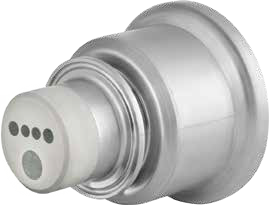
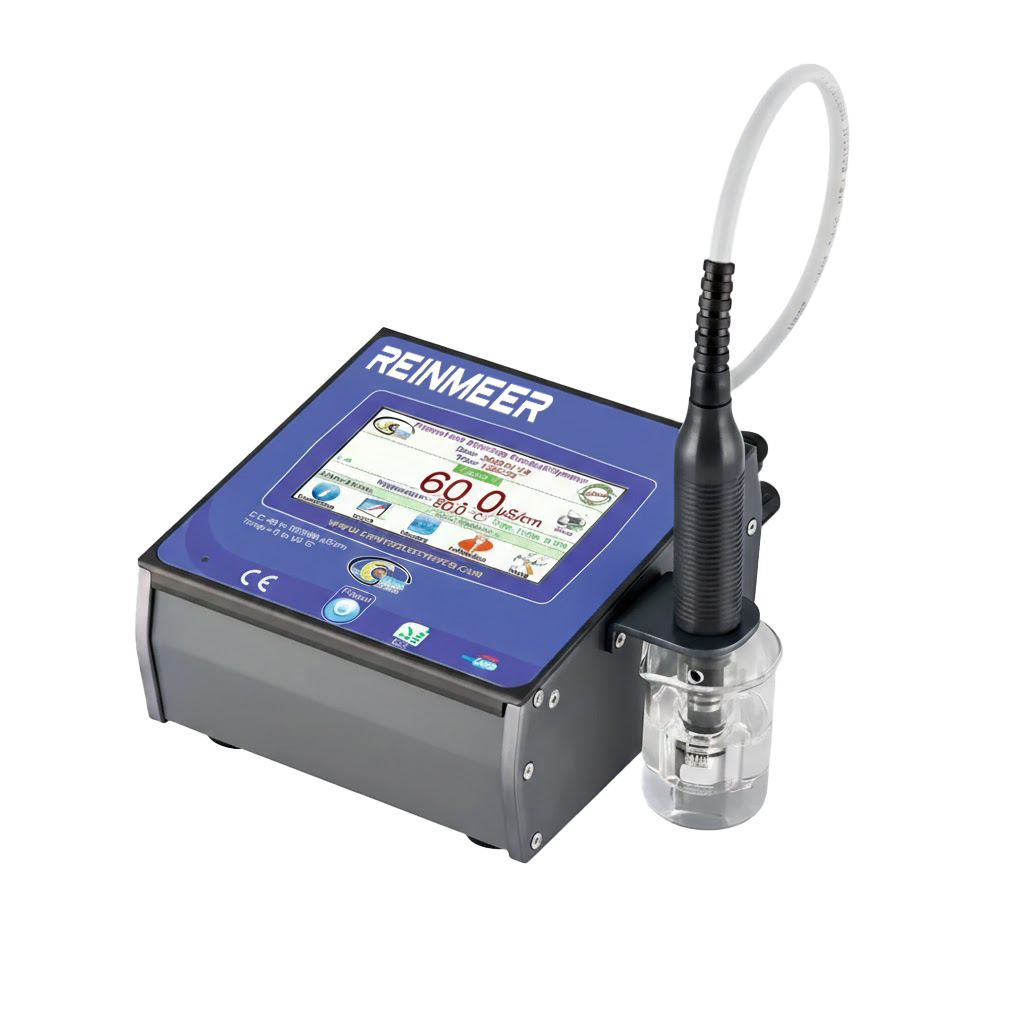
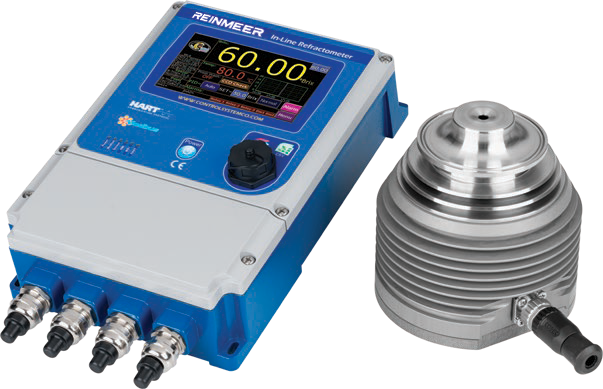
Analytical measurement instruments are used in industrial processes where liquid quality, concentration, conductivity or process condition must be monitored with reliable measurement data. Reinmeer provides analytical instruments designed for applications where conductivity measurement, liquid analysis and process monitoring are required in water treatment, chemical processing, food and beverage production, utilities, laboratory environments and industrial automation systems.
Conductivity measurement is one of the most common analytical parameters used to evaluate the ionic content of a liquid. A conductivity meter can help detect changes in water quality, chemical concentration, contamination level, process consistency or rinsing performance. In many facilities, conductivity data is used together with temperature measurement, flow measurement and process control systems to maintain stable operating conditions.
Reinmeer’s analytical product range includes inline conductivity meters, benchtop conductivity meters and inline refractometer solutions. Inline instruments are suitable for continuous monitoring directly in the process line, while benchtop devices are typically used for laboratory checks, sample testing or quality control procedures. Refractometer instruments support concentration-related measurement where optical analysis is required.
Reinmeer focuses on dependable measurement, practical integration and application-oriented product selection. Whether the requirement is water conductivity monitoring, process liquid analysis, laboratory conductivity testing or concentration measurement in industrial applications, Reinmeer analytical instruments are developed to support consistent measurement and informed process decisions.
Key Factors in Conductivity Meter Selection
Selecting the right conductivity meter starts with the measurement range and liquid type. Low-conductivity applications such as purified water or demineralised water require different sensor characteristics than higher-conductivity chemical solutions or wastewater applications. The process temperature, pressure, flow conditions, installation location and chemical compatibility should also be reviewed.
Temperature compensation is an important consideration because conductivity changes with temperature. In many applications, the conductivity meter must either measure temperature directly or apply compensation to provide a more stable and comparable reading. Without suitable temperature compensation, conductivity values may appear to change even when the liquid composition remains the same.
The measurement method should also match the application. Inline conductivity meters are preferred for continuous process monitoring, automation and real-time control. Benchtop conductivity meters are useful for laboratory testing, sample verification and quality control. For applications involving concentration measurement, an inline refractometer may be more suitable depending on the liquid and measurement objective.
Conductivity measurement is the process of determining how well a liquid can conduct electrical current. This value is influenced by the amount and type of dissolved ions present in the liquid. In general, a higher concentration of dissolved salts, acids, bases or other ionic substances results in higher conductivity.
In industrial applications, conductivity is commonly used as an indicator of liquid quality, chemical concentration or contamination. It does not identify the exact chemical composition of the liquid, but it provides a fast and practical way to detect changes in the process. This makes conductivity measurement useful in water treatment, rinsing processes, cooling systems, chemical dosing, cleaning systems and process liquid monitoring.
A conductivity meter may be used as an inline instrument for continuous measurement or as a benchtop instrument for sample-based analysis. The correct configuration depends on whether the process requires real-time monitoring, periodic testing or laboratory verification.
Analytical instruments are often integrated with PLC, SCADA, DCS, controllers, recorders or local monitoring systems. Inline conductivity meters can provide continuous measurement signals for process automation, while benchtop instruments are typically used for sample-based checks and laboratory records.
Reliable integration depends on signal type, sensor installation, cable routing, process connection, temperature compensation and commissioning settings. In continuous monitoring applications, the conductivity meter should be installed in a representative measurement point where flow conditions, air bubbles, deposits and temperature variation do not distort the reading.
Conductivity measurement can also be evaluated together with other process parameters. In liquid process systems, conductivity data may be combined with temperature measurement, flow measurement and process control to create a more complete view of process stability and product quality.
An inline conductivity meter is installed directly in a process line, tank or treatment system to provide continuous measurement. It is suitable for real-time monitoring, automation, alarm functions and process control. Inline measurement is useful when conductivity values must be tracked continuously during operation.
A benchtop conductivity meter is used for testing liquid samples in a laboratory or quality control area. It is suitable for sample verification, batch checks, comparative testing and controlled measurement conditions. In many facilities, inline and benchtop instruments are used together to support both continuous monitoring and laboratory confirmation.
No. Conductivity measurement does not identify the exact chemical composition of a liquid. It measures the ability of the liquid to conduct electrical current, which is influenced by the concentration and mobility of dissolved ions.
This makes conductivity measurement useful as an indicator of liquid condition, concentration or contamination, but it should not be treated as a full chemical analysis. When exact composition is required, conductivity measurement may be used together with laboratory analysis or other analytical methods.